Showing posts with label Tucson Art History. Show all posts

Monday, October 6, 2025

The Land The People 500 Years Later

 Dateline: 1991-1992 

 “The Land The People 500 Years Later” was a 1992 postal art exhibit, open to artists worldwide. The exhibit offered an alternative narrative to the official ongoing Quincentennial celebrations. 

I had no idea what to expect when the call was issued. I typed up  a press release, made copies and  mailed them off to colleagues and various publications. 

Sending things in the mail is an act of faith of course. Artist friends and I used to send off things to one another, a shoe, a banana, toast. Anything that we could put a stamp on - write the address in ink see what happened. The wild part is almost everything made it through - even the toast - albeit in a special postal bag.


For this exhibit I was delighted to receive works from dozens of artists around the world. Going to the mailbox was an adventure. Magazines, posters, stickers, original works of art and slides arrived as the deadline approached. The work was organized on poster boards then exhibited throughout 1992. Local cafes, art spaces and businesses lent their window spaces for temporary exhibits. Friends and I reproduced and distributed works in "zine" form and mailed out to all the project participants. 

The slide show component of the exhibit was shown during local events throughout 1992 and 1993. The show was shared by myself, and colleagues in a number of cites. We distributed materials via the postal service. Each image neatly organized into slide pages with notes. The show would be exhibited then passed onto the next person on the list. Somewhere along the way it vanished. 


Documenting this body of work has been interesting. I found an old slide projector, cleaned it up and took digital images of slides. (They didn’t turn out as nicely as hoped so I'm looking for new options.) Once I can find them, the slides themselves are in fairly good shape, a few of the cardboard frames needed repair. The first half of my career was documented in slides, newsprint and photographs. Transferring all of these materials to a digital format is an extended process. My plan is for all of my archives to eventually become part of various larger collections. 

Images include a mix of drawings, paintings, collage and text art by; Ernest Victor, Rabascall, Rogelio Lopez Cuenca, Roberto Bedoya, Karen Atkinson, Michael B Schwartz, Guillermo Deisler, Huna and Bruno Capatti and others. 

The Land The People 500 Years Later
Bibliographic Materials


Brin-Ingber, Judith
Letter with bibliography for the study of Latin American Jewry
June 1991

Delaney, Paul
Amid Columbus Festivals, Spain in Planning to Recall the Jews in its Past
New York Times April 11, 1992

Edict of Ferdinand and Isabella, King and Queen of Spain
Grenada, Spain March 30 1492, Promulgated April 29 1492

Elliot, Jan
Exhibiting Ideology
A Review of First Encounters: Spanish Explorations in the Caribbean and the United States, 1492-1570

Goodman, Fredrick 
The Other 1492
pp 9-13
Midstream, January, 1992, Vol 38, No. 1

Krupnick, Samson
Long Before 1492, Jews persecuted
National Jewish Post and Opinion
Volume 58, number 22, February 19, 1992, page 11.

Landers, Peggy, Knight-Ridder Newspapers
Disasters pf 1492 draw Jews and Hispanics together
Arizona Daily Star, Sun October 6, 1991

Lerkin-Elkin, Judith
Colonial Legacy of Anti-Semitism
Report on the Americas, Volume 25, Number 4, February 1992, pp 4-7

Millet, Perry
Science Museum exhibit explores Spanish voyages
Pioneer Press 
May 20, 1992

Montalbano, William D. Los Angeles Times
King decries Jews’ expulsion from Spain
St Paul Pioneer Press, Wednesday April 1, 1992, pg 4-A

Pfeifer, Pat
Indians decry Columbus Exhibit
Star Tribune Sat. May 30, 1992

Porter, Louis
Bellecourt throws blood on Columbus ship replica
St Paul Pioneer Press, P A-1, A-9
Sat May 30, 1992

Prince, Pat
A Columbus counterpoint
Star Tribune

Raphael, Chaim
Sephard ’92
Commentary Magazine, 
Vol. 93 Number 3, March 1992

Raphael, Dr. David
Something is wrong with the plans for Sepharad 91 celebrations
American Jewish World, 
Minneapolis, May 24, 1991 p.5

Rosenthal, Dr. Miriam Freund
The expulsion from Spain was a watershed moment in Jewish history
American Jewish World, 
Minneapolis, January 21, 1992 p.5

Rosenthal, Dr. Miriam Freund
Roots of expulsion go back more than 500 years
American Jewish World, 
Minneapolis, January 24, 1992

Silva Tana
UF Indian exhibit damaged in Minn.
The Gainsville Sun
Tues June 2, 1992

St Paul Pioneer Press Editorials
Don’t cancel exhibit about Columbus
St Paul Pioneer Press
Tues June 2, 1992

Star Tribune Editorial
True interaction at the Science Museum
Tues May 26, 1992
Star Tribune, P. 14 A

Soucheray, Joe
Why let Bellecourt vandalize exhibit?
St Paul Pioneer Press
Wed June 3, 1992

Walsh, James
Museum Won’t press charges over blood on Columbus exhibit
Star Tribune
Thurs June 4, 1992

Whitman Pearl
Letter From Madrid
pp14-16
Midstream, January, 1992, Vol 38, No. 1


###


Thursday, January 5, 2023

 Art.Ology: Apothecary and Druggist Bottles

     A lot of the bottles I’ve found are tiny. Some are perfume, but others have a most curious ambiance.

   Prior to family doctors, health care or the DEA was the apothecary. These holistic Pharmacy's were generally the only option for those in pain. It’s wild to realize that historically speaking, our contemporary health care system is relatively new. But back in the day, the pharmacist was the only one in town to address medical needs from dentistry and eye care to surgeries and sickness.


   Old time prescriptions mixed up some curious concoctions. A blend of tradition, innovation and inebriation. Maybe you would like a swig of old Dr. Goulds Pin Worm Syrup? Stomach out of wack - try some 33% Alcohol “Homestead Tonic”.

Natural ingredients such as Sarsaparilla’s would be mixed with alcohol, morphine, opium, cocaine, heroin, alpha or beta eucaine, chloroform, Cannabis indica, chloral hydrate, and/or acetanilide.

All these tripping patients needed to know which “medicine” they were taking, so each container had a different shape, color and form. Labels included

“These medicinal compounds would have been distributed solely based on a doctor or pharmacist’s diagnosis and prescription. While the heyday of such proprietary druggist bottles existed between the 1870s and the 1920s, earlier examples certainly existed, and typically bore embossing featuring some combination of the name of the druggist, store, and location. Such bottles have also been termed pharmacy, drugstore, or prescription bottles.”
- Digging I-95

   One of the largest collections of old apothecary bottles is in Tucson, AZ at the Coit Museum of Pharmacy & Health Sciences. It’s a hidden local curiosity that might just alter your. Interpretation of history.

   It made me wonder if there was a neighborhood apothecary nearby. During the early history of our neighborhood, called Dunbar Spring, many worked in the mines, walking a few blocks to the railroad where trains would pick up workers. Some elders recalled the vendors selling lunch foods, fresh tortillas and drinks. I can imagine some tonics were available to ease a working person’s pains. Following World War 2 my house was inhabited by a vet, who perhaps used the various tonics to ease battle wounds. Who knows. The earth hides many clues, and mysteries.

   So as you're out there digging up treasures, beware those tiny tonic bottles and objects surrounding them. If you do find some cool bottles the Bottle Typing/Diagnostic Shapes blog may be able to help you.

   Another great source are the The Federal Highway Administration (FHWA) and Pennsylvania Department of Transportation (PennDOT) who put together a cool site called Digging I-95 which documents many of the artifacts they are finding, including druggist bottles, their uses and history. This site is great and helped me identify a Methanol Inhaler Tube and syringe. 

   Happy Digging!


White metal syringe and Cushman’s Menthol Inhaler tube. Source Digging I-95

White metal syringe and Cushman’s Menthol Inhaler tube. Source: Digging I-95


Tuesday, June 27, 2017

Civil Rights Artwork Available for Exhibit

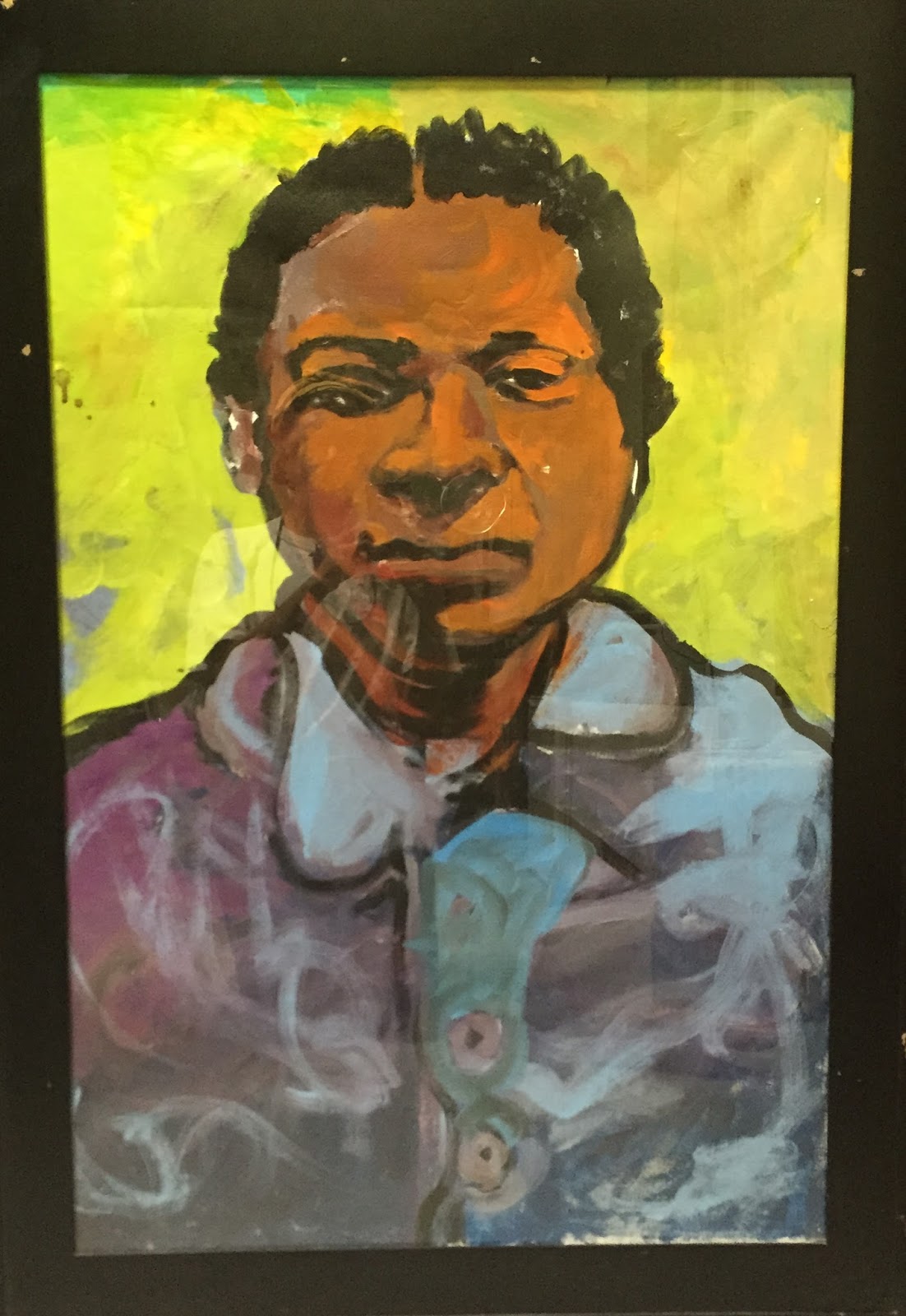
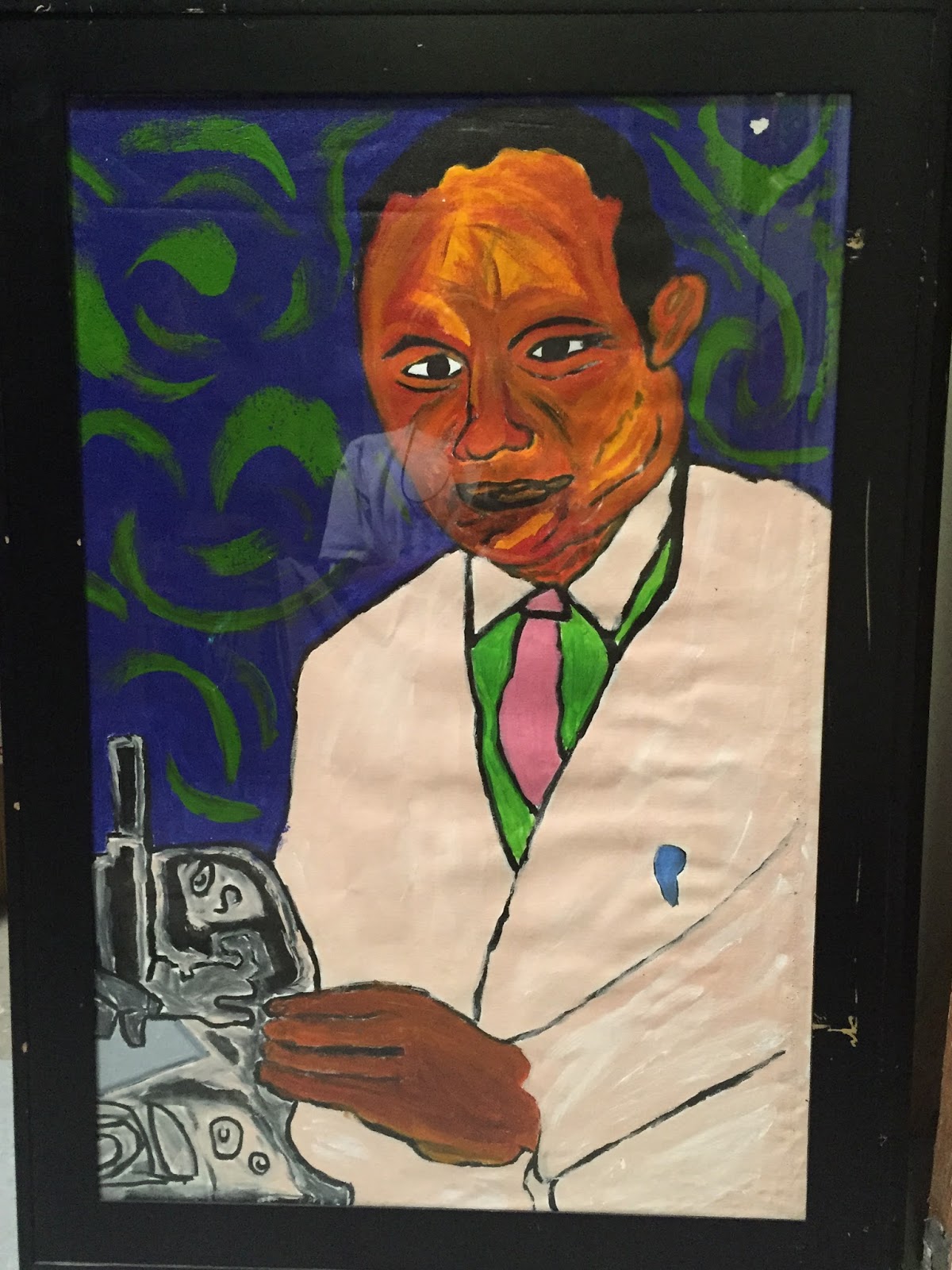
This unique collection of paintings were produced by Tucson Arts Brigade and the Tucson Volunteer Center for the annual Martin Luther King Jr. Day of Art Service. The artworks were part of a popular education project conducted each year for the community at large at the Community Arts Lab

Over a series of workshops participants researched and learned together about the civil rights era. The artworks were then installed as backdrops inside a real bus. Volunteer Center staff developed a walk through theater piece to teach children about freedom summer. The paintings were featured by local news stations on live television in 2003 and 2004. The Volunteer Center housed the paintings until the center closed. The paintings then ended up in storage and finally returned to TAB in 2015. 
These works are available as a collection for display and educational purposes. Please contact TAB to learn how you can exhibit these works.

We are seeking a permanent home for this collection. If you have ideas about where this collection could be best housed please contact TAB.

Tucson Arts Brigade

Black Lives Matter
By Valeria K Hutchings
Size: 104” x 89”
Acrylic on Canvas

Bus Backdrop Art
Lead artists: Michael Schwartz (TAB), Danielle Fink Volunteer Center

Andrew Young
Size: 41” x 29”
Acrylic on Canvas
 

Emma Baker
Size: 41” x 29”
Acrylic on Canvas
 

Harriet Tubman
Size: 41” x 29”
Acrylic on Canvas


Ida B Wells
Size: 41” x 29”
Acrylic on Canvas


Percy Lavon Julian
Size: 41” x 29”
Acrylic on Canvas


I Am A Man
Size: 37.5” x 25.5”
Acrylic on Canvas


Sing for Justice
Size: 36” x 51”
Acrylic on Canvas


Civil Rights March 1
Size: 37.5” x 25.5”

Acrylic on Canvas


Civil Rights March 2
Size: 37.5” x 25.5”
Acrylic on Canvas


Civil Rights March 3
Size: 26.5” x 128”
Acrylic on Canvas

Size: Shaped Canvas 49” x 80”
Acrylic on Canvas
 This work was created by youth for MLK Day of Service. The work was featured live on local news, who reported back throughout the newscast and interviewed participants as the mural progressed.


Sunday, June 19, 2016

Iconic Downtown Murals Become Destinations

Niki Glen's Pollinators Mural
Tucson, AZ: The Downtown Mural Program has been a huge success. There have been numerous stories in the press and social media is on fire. This program comes after years of hard work, experimentation and the perfect timing. Our most recent collaborations have brought joy, inspiration, dialogue, excitement and energy to our downtown.

Hundreds of people are coming downtown to see the murals, thousands more are talking about them. This is much more on the way, stay tuned!

This artwork is inspired by Tucson’s rich cultural diversity, history and urban fabric.
The project started back in late January on the heels of the City of Tucson Environmental Services mural project, and the new Traffic Control Box mural initiative. 

 The Arts Brigade issued a statewide call for Mural Artists to submit works, the selection committee, which included Julie Sasse Chief Curator Tucson Museum of Art, Ceci Garcia and Susan Silverman from the Tucson Pima Arts Council Public Art Committee,  Mary Lou Thompson of Tierra Antigua Realty and Brandi Haga-Blackman of the Downtown Tucson Partnership reviewed 58 applicants work. As you can see we were seeking muralists that would uphold the highest professional standards of quality, with delightful and inspiring themes.

We want to especially thank the Tohono O’odham Nation, Visit Tucson and Arts Brigade supporters for funding this project. Our partners Graffiti Protective Coatings, Park Tucson, and the Downtown Tucson Partnership provided critical in-kind services.

This project would have been impossible without the hard work and dedication of Sabrina Wilson, our Assistant Project Manager. Our artists are, Ignacio Garcia, Niki Glen, To-Ree-Nee Wolf, Rock Martinez assisted by Cristina Perez, Summer Kitchen Studios – Alexandra, Rachel and Tim, Jessica Gonzales, Luis Mena and Isaac Caruso.


A very special thank you also to the Businesses and property wall owners: Rialto Theatre, City of Tucson Housing and Community Development Department, 5 North 5th Hotel, Café 54, Wig-o-Rama, Century Link and John Wesley Miller. 

If you need additional information on the mural project, or how to support our efforts, visit our website at www.TucsonArtsBrigade.org

There were a number of great stories about the Downtown Mural project. Here are links to the Arizona Daily Star and Zocolo articles, which include some great writing, photographs and links to artist websites for you to enjoy.

9 new murals in downtown scream TUCSON
By Kathleen Allen Arizona Daily Star

Tucson’s New Outdoor Art Gallery
by Craig Baker, Zocolo Magazine


Friday, April 22, 2016

City of Tucson Mural Program Announce winning designs for Downtown Murals Open House Tues. April 26

Inline image 1

Tucson, AZ: The community at large is invited to see the winning designs for the Downtown Mural initiative during a Mural Design Open House, Tuesday April 26, 6-7pm at the Pima County Public Main Library 101 N Stone Ave. in the Lower Level Meeting Room. This is an all ages free event.

Following an exhaustive selection process the City of Tucson Mural Arts Program announces the winning artists for the Downtown Mural initiative. The selection committee included Julie Sasse Chief Curator Tucson Museum of Art, Ceci Garcia and Susan Silverman from the Tucson Pima Arts Council Public Art CommitteeMary Lou Thompson of Tierra Antigua Realty and Brandi Haga-Blackman of the Downtown Tucson Partnership.

Eight mural teams have been selected to create murals throughout the downtown Tucson starting May 2. Painting will continue through June 6.

Issac Caruso, at 9 North Scott Ave

Niki Glen, at the West corner of 5th Ave and Toole

Rachel Slick, Tim Schirack, and Alexandra Gjurasic, at Café 54, 54 East Pennington

 Ignacio Garcia at the Rialto Theater, 318 E Congress St, Tucson, AZ 85701

Rocky Martinez, at Benjamin Supply, 440 North 7th Ave 

 Luis Mena, at Century Link, 142 E Pennington

Jessica Gonzales, at Wig-O-Rama, 98 East Congress

To-Ree-Nee Wolf Keiser, at Old Scrappy’s, 213 East Broadway 85701
http://www.toreenee.com/


Volunteer, underwriting and sponsorship opportunities are available for this an future projects. Contact the Tucson Arts Brigade online at www.TucsonArtsBrigade.org or by calling 520-791-9359.

This project is a program of the City Of Tucson Mural Program, which is managed by the Tucson Arts Brigade with funding from the Tohono O’odham Nation, Friends of Tucson Arts Brigade and Visit Tucson. Additional support is being provided by the Downtown Tucson Partnership, 2nd Saturdays Downtown, Park Tucson and Graffiti Protective Coatings, Inc. (GPC).

Thursday, January 28, 2016

MURAL/TRASH CONTAINER ART TO BE UNVEILED

MURAL/TRASH CONTAINER ART TO BE UNVEILED

 On Friday, February 5, 2016, the City of Tucson Environmental Services Department will unveil and begin delivery of five metal trash containers that have been painted with murals as part of an effort to reduce graffiti.  Environmental Services contracted with the Tucson Arts Brigade to coordinate the project. Additional funding was provided by the Graffiti Resource Council in Washington, DC.


Five Tucson artists have designed and painted the trash containers which will be provided to businesses that have a high potential for graffiti and tagging. The City, working with the Tucson Arts Brigade hopes the program will also improve urban aesthetics and ultimately save taxpayers money on graffiti abatement.
Porter McDonald

Ruben Moreno

Johanna Hand

Niki Glen

Sasha Lewis

Five artists were selected from 44 applicants who ranged from established painters to first-time muralists. The artists are Johanna Hand, Sasha Lewis, Niki Glen, Porter McDonald and Ruben Moreno. The city provided $5,000 in funding for the pilot program, which was matched by the Graffiti Resource Council, a Washington, D.C.-based nonprofit vandalism prevention organization.
Tucson City Councilman Steve Kozachik said, “City leaders have been working on this program for quite some time. Even though such initiatives may not end the exorbitant cost of graffiti abatement, they can potentially help save money as well as beautify the city.”

The unveiling of the trash containers will be held in the parking lot, behind the Chicago Store in downtown Tucson on Friday, February 5, 2016 at 12:30 p.m. All five of the trash containers will be on display before being delivered to the business customers participating in the program.


Sunday, May 15, 2011

Community Arts Lab

The Community Arts Lab (CAL) was a unique experiment in community art making that has deeply informed the TAB narrative and practice. CAL was a learning environment, a production facility, a a gathering place, a theater, puppet production studio, gallery, library, office and who could forget “art-supply alley”. This was a place where artists and cultural workers of all ages could come to teach, create art, learn or launch new initiatives. Every day and evening was busy, with phones ringing and schedules packed. It was a dynamic environment that birthed many new initiatives at a time of renewed interest in civic engagement and social change.

There were several ongoing program areas that included workshops for people of all ages and abilities. These initiatives fell under four program areas:

  • Youth Community Arts Training Program (YATP)
  • Community Arts Training Program
  • Popular Education and Labor History
  • Women’s Space

Workshop samples included drawing, painting, sewing, paper making, print making, collage, photography and theme based workshops such as “How Would Fredrick Douglas Respond to Big Mountain?”, “Stone Soup” and “Community W.O.R.K.S.”.


From 1998-2004 CAL grew and developed alongside of TAB. Events became larger and more dynamic. CAL had outgrown it’s small studio. The center, maintained by a volunteer collective, simply didn’t have the resources needed to re-open at a new location that was up to code.


In 2004 the decision was made to close CAL, incorporating it’s rebirth into our long range planning. That day may not be far off, and as with all TAB projects, it will be something new, unexpected, exciting and cutting edge.