Showing posts with label Cultural Animation. Show all posts

Wednesday, November 5, 2025

LIVEARTS 4U: Postal Arts, the Mail Art Movement


The Mail, or Postal Art movement finds it’s roots in the FLUXIS movement of the 1950’s. 
Mark Bloch is often thought of as establishing the movement, having founded the The Postal Art Network (PAN) and maintaining archives spanning from 1978-2009.  The Mail art movement is notorious for circumventing the traditional art distribution systems of galleries and museums. The movement is decentralized, thoughtful, humorous, warm and seems to ebb and flow depending on the mood of the day. 

Today museums keep Mail Art in their archives, understanding that the movement, while still active, remains a distinct part of our cultural memory. The SmithsonianGetty, and even Oberlin College maintain beautiful collections. 

This movement has many voices, multiple aesthetics and various ritual practices. Some works you might keep, others get passed on to the next artist. Sometimes a work is diverted to a museum of cultural institution. Artists like Cracker Jack Kid were really prolific, and it was fun to pass on that work to the next artist. One could go further and trace the origins to the anti war sentiments expressed by earlier Dada and Surrealist artists, artist correspondence and absurdist movements. 

Mail, Postal Correspondence and Postcard Arts projects remain part of our contemporary discourse. Artists and cultural workers formally and informally sharing works and ideas via the postal service. Clearly the two dimensionality of digital platforms has offered additional platforms and means of dialogue and collaboration.While this is true, the textural qualities of Mail Art remain crisp and relevant today. 

So. What you will need to get started:

Materials to have ready: 

  • Scissors
  • Markers
  • Stamps
  • Glue
  • Envelopes
  • Blank paper
  • Collage materials

Are you ready to apply for a few shows? Here are a few sources to get you going. 

Mail Art Portugal  - a well trusted international source

New Museum of Networked Art: Mail Art Call to Artists

Samples from the Postal Art Project of 1992 (Click on image to see a larger version) 
Works were exhibited, amended, then sent back out through the postal art networks. Other works were donated to various archives and collections. 

Postal Art Broadside, USA, 1992


Postal Art Distribution Box, USA, 1992

Stamp Art (1) (2), Global, 1992

Mike Duquette correspondence, Canada 1992

Border Arts Workshop, USA 1992

Spiral Kid, USA1992

Rene Heybach, USA 4 Postcards, 1992


Mail Art Network Collage, from Il Dibattito: The Stranger, Italy 1992

Michael Schwartz, USA, Top Secret 1992

Timetrack Poster, Osaka, Japan, 1992

Wednesday, January 4, 2023

Archiving the Pre Digital Alternative Press

 I’ve always loved small press zines. Mailing parties, bulk mail permits, getting everything off to the printer on time. The smell of freshly printed newsprint strapped together neatly in bundles.

As technology developed the job was made much easier, but we lost that hands on look, the opportunity to work face to face in the same room for hours. The art of hand making a magazine, the collaborations between editors, writers, artists and audience is dynamic and exciting.

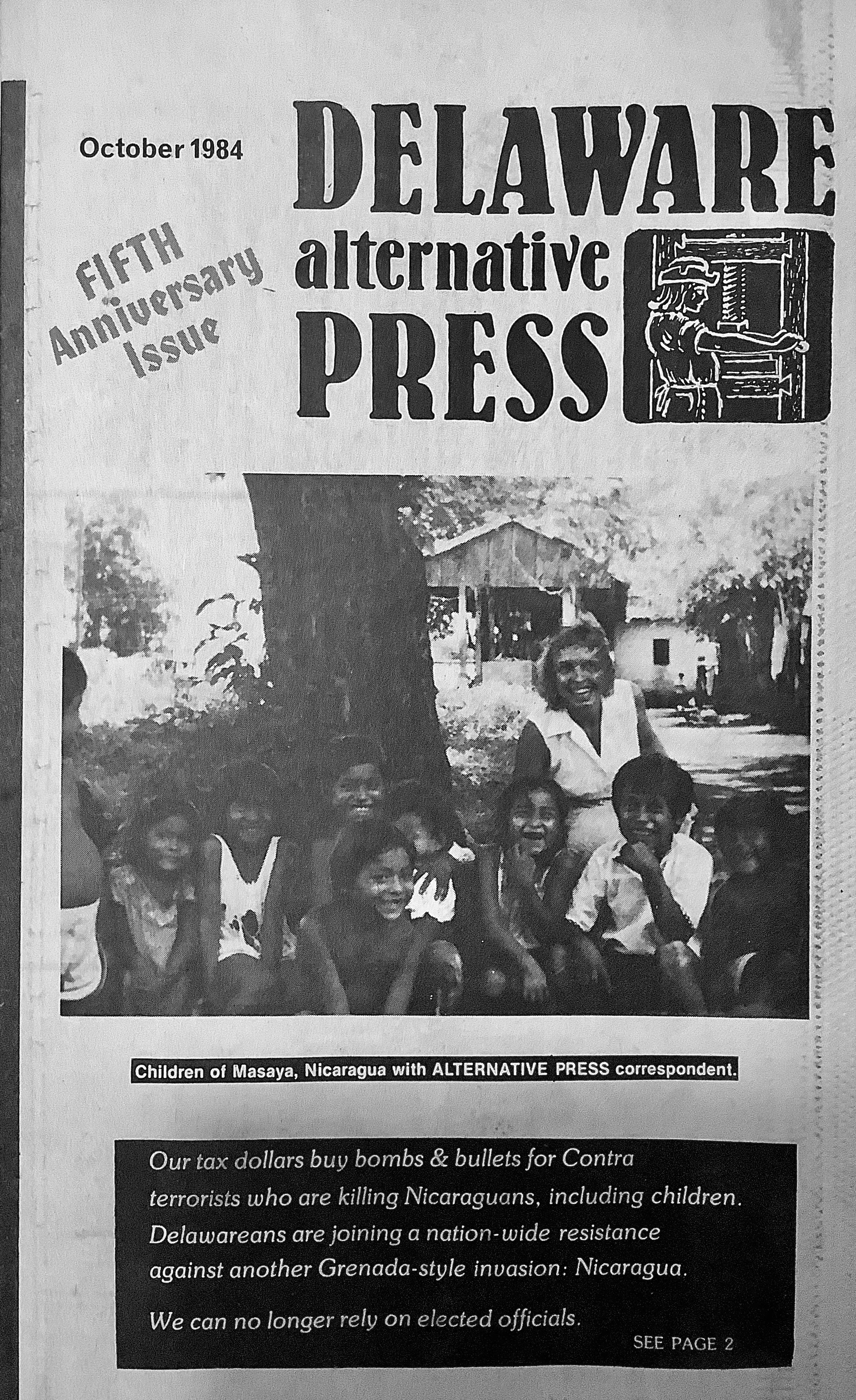
(1979-1985) The Delaware Alternative Press
was my introduction to the world of alternative publications. This collective put everything together by hand, typewritten, cut and pasted. The office was cozy and professional. Picking up the freshly printed offset web press, driving them back and having a distribution party was all the reward we wanted. DAP articles were well written, edited and facts checked.


(1980-1994) Cultural Democracy Magazine
The Alliance for Cultural Democracy (ACD) recently reconvened on-line to organize archives of the organization. ACD was an important organization, a vast national network of artists and cultural workers dedicated to cultural democracy and equity. 

(1989-90) The Campus Slant  had two issues printed on newsprint. It was the newspaper of the Students for Creative Action Now (SCAN). We were a phenomenon of sorts, a student activist group famous for challenging The University of Arizona  to stop the Mt. Graham telescope monuments to Columbus on Sacred Apache Land. We organized one of the only student referendums in the history of the university. While we lost 48-52% we succeeded in shining a spotlight on the issue, and among our many cultural rights victories, forced the UA to formally recognize the existence of the San Carlos Apache Tribe.

 
(1991-2) Student Artist Call was a collective chap book containing materials submitted by participants and distributed through the mail. As a working group of SEAC (the national Student Environmental Action Coalition) pulled off three issues and succeeded to inject radical artistry, puberty, theater and prop making into an emerging social justice movement.


(1992) The Postal Art Broadside was a publication documenting the Postal Art project. The project featured walk up art stations, exhibits of all work submitted, and emailing of hundreds of works worldwide - feeding etc works back into the postal art movement. The project included a series of newspaper boxes converted to distribute Postal Art Kit’s and works of art for a quarter. 

 
(1997 - 2001) A/Rise was the newsletter of the Tucson Arts Brigade. There were (8) issues published before switching to an online version. TAB was a community arts collective, that established a city wide Mural Movement that hired artists to work in schools, neighborhoods and community centers. 


Tuesday, January 26, 2021

Mapping New Circulatory Systems

Weekly Wednesday Community Arts Workshops Continue
 (artists journal)

Over the past several years I’ve been volunteering as as Artist in Residence (AIR) with Veterans Rescue Mission, a mini house village dedicated to getting vets the services to which they are entitled. The site is dedicated to transitional living, with several full time stewards on the acre campus. It’s a fun project, no expectations, the participants drive the process. We had been working on murals, gardens, shade structures and exhibits prior to “COVID 19”.

Working on a shade structure.
Throughout the past year colleagues and I have struggled with the most effective ways to adapt our community art making practices amidst this pandemic. We have utilized new platforms, podcasts, Zoom, emails, calls and texts. For a few weeks it was safe to meet in person, that ended quickly and it was right back to Zoom. Recently our weekly sessions added artist presentations, time for journal reflection and a new mural class.


Our earth day session included time for house plants to socialize over Zoom.

We tried various collaborative drawing experiments.


Participants are doing individual projects in our houses and places of work. We are creating things and offering services vital to our community. The general unifying theme seems to revolve around this idea of adaptation- developing systems of support, for our hearts, bodies, minds and souls. There is a strong awareness of the impacts of climate change.

The change to on-line has been awkward for everyone. Community arts practice is often about spontaneity, new ideas emerge from discussions while working together, poetry being read, food  served -  that dynamic buzz of excitement.

As participants described their lives and needs we came up with the idea of art deliveries. The first round of Emergency Art-Aid kits was delivered with contributions of seeds, plant starters, art supplies and tools. We all depend on these systems, networks for production and distribution of goods and services. This idea of transit, of making, then moving objects from one place to another has revealed abundance. There are gardens, seeds, a thrift store, teachers, weavers, builders, neighbors and networks.

As I drove about delivering kits I thought of my voyage as wing akin to connecting the meridians of our city, a network of veins or rivers, a life force being animated. As we engage this system the kinesthetic excitement of collaboration produces an energy wave. We can measure that wave, observe and then re-engage it. This process of adaptation amidst uncertainty and grief is producing innovation.

We have been asking some framing questions.

  • How can we use Art-Aid kits to do things  together?
  • What do we need to realize our project goals?
  • Personal goals?
  • How do we raise each other up?
  • How do we support one another authentically?
  • How can we help each other on location specific projects like murals and mosaics?

Then more broadly:

  • How can we intentionally use the arts to lift the creative energy of this place?
  • How can we breath life into, to animate our community?
  • How does intentional breathing increase circulation?
  • Who are we serving?

In the weeks and months to come, we will find out. Slowly, as a community of makers and learners we are figuring this out together.

The Garden at VRM is thriving.

Workshops are every Wed. 4pm. To register, or if you have questions contact me through my website here: www.MichaelBSchwartz.com

Saturday, August 8, 2020

No Justice No Peace Poster Series

Black Lives Matter

These posters are from a series done for an AFSC traveling exhibit. They are all free to download and copy, give away, share. These were inspired by the protests in Ferguson, MO, the now historic seven day march entitled, “Journey for Justice: Ferguson to Jefferson City” and continued pattern of killings.

There are more topical posters in the AFSC Poster Series

#SayTheirNames

Trayvon Martin
Tamir Rice
Michael Brown
Eric Garner
Philando Castile
Breonna Taylor
George Floyd


Wednesday, June 6, 2018

2018 Mural Festival: Sugar Hill Tucson, AZ

2018 Neighborhood Mural Festival April 13-15

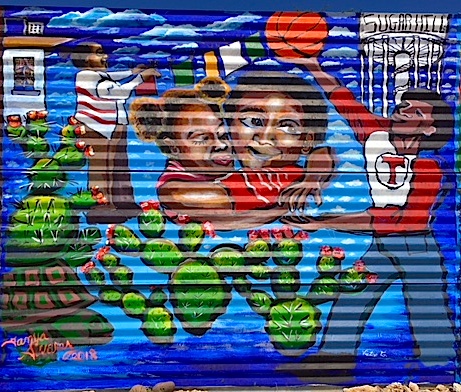
On April 13-15 artists and neighbors gathered for the first ever neighborhood based mural festival in Tucson, AZ. This festival was a huge success, with fourteen new murals created. Our theme was voices of Sugar Hill neighbors. Gathering and listening to these stories is an ongoing process. What we are learning, we are painting. These stories define who we are as a people, as a community and city. What makes us unique and creates an ambiance of tranquility? Knowing our stories, our roots is critical to maintaining our identity. 

The Festival came with a few unexpected perks. Famed muralist David Tineo arrived to paint a mural and canvases he left for youth to finish. Imagine getting to finish a master artists work as a young artist. Artists painted, and cleaned the area. We also cleaned up the Bronx Wash area, removing many bags of trash form the site. The other surprise was an intervention by the Arts Foundation for Southern Arizona, who cite an anonymous call "reporting" our murals a month before the festival, causing a delay to this day (as of 6/7/18). We learned about Tucson's written cultural policy (COT Administrative Directive 7) and started the process of advocating for neighborhood arts resources. While our festival received no funding, we realized that resources do exist, but are being diverted to expensive works of public art that often don't reflect the needs, concerns, voices, suggestions and history of residents. The delay was a shock and disappointment for artists and neighbors, but as always we took a bad situation and made some good come from it. 

We have more neighborhood Story Circles planned for Sugar Hill. One of the muralists, Sadie Shaw, became president of the North West Neighborhood Association, 13 new murals were created, the once secretive AFSA Artist "pre-qualified" list is now open for all to apply to, and conversations about Arts Based Solutions to Community Needs are being discussed. A door has opened to the AFSA, and our work falling more into synchronicity with each conversation. In our work there are always unexpected adventures, twists and turns. We live in a community that values civic participation, and if you find a problem and are willing to help solve it good things emerge.

Sadie Shaw: Family Stories
Teresa Diane Altamirano
Annalisa Loevenguth
David Tineo
Sabrina Vincent
Tanya Alvarez
Delbert Antone
Xaivier Ringer
Jessa Hudgens
Julian Argote

Caressa Wittwer
Michael Schwartz - El Hombre De Maiz (for my father)
Sharon Pederson
We were shocked and saddened that our local arts agency (Arts Foundation for Southern Arizona) gave us a multi-month run around, many artists didn't participate due to lack of wall space.